Akshat (Rice)
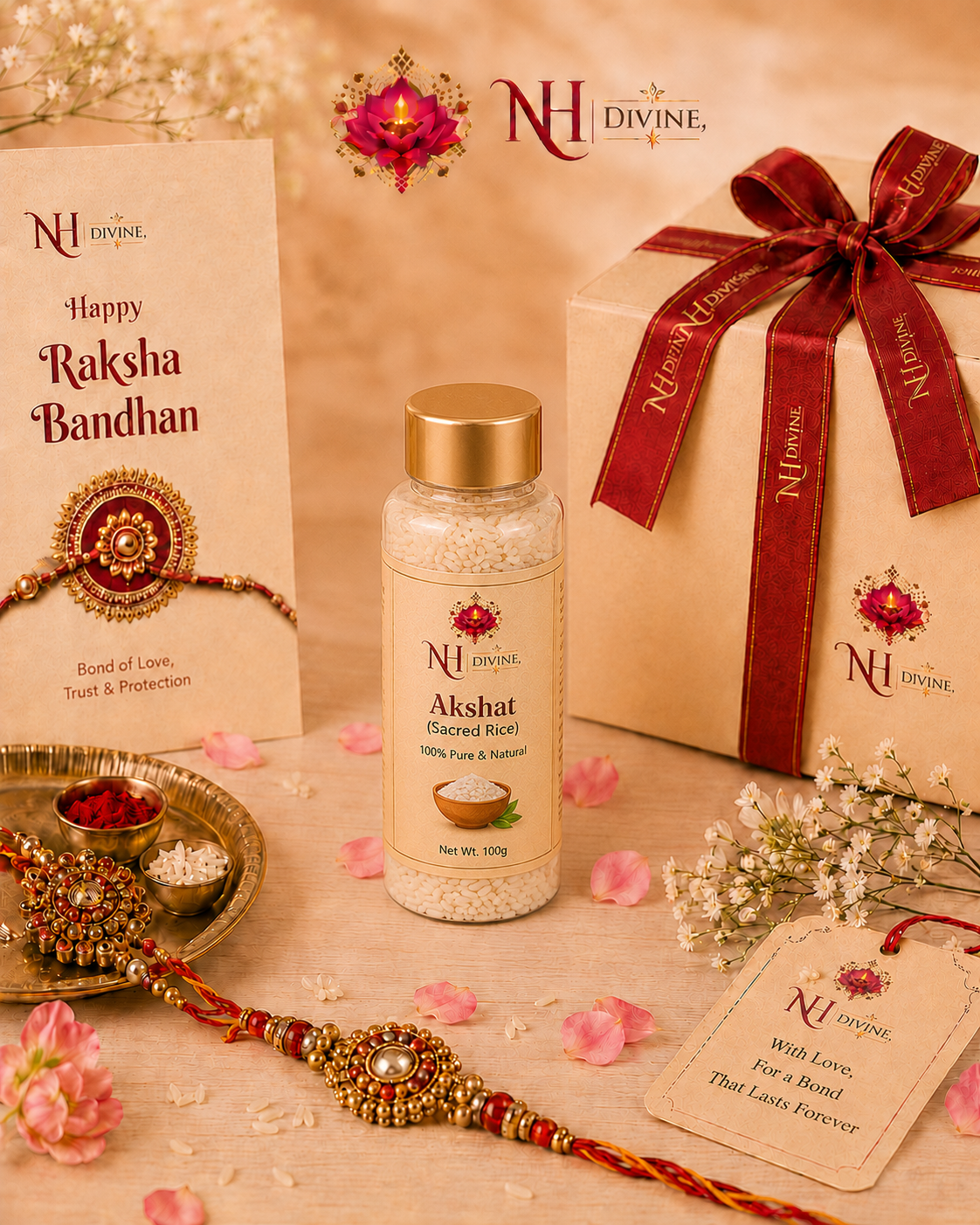
Premium ceremonial akshat consisting of clean, whole, unbroken rice grains used for the traditional Raksha Bandhan tilak ceremony. Symbolizing prosperity, abundance, and blessings, these ritual-ready grains complete every pooja with authenticity and tradition.
Akshat (Rice)
Akshat, the small handful of whole, unbroken rice grains included in the Premium Rakhi Box, might be the most modest item in the entire set by appearance, yet it carries a ritual significance that places it right alongside the roli and chandan as an indispensable part of the pre-rakhi tilak sequence. In Hindu tradition, akshat refers specifically to rice grains that are whole and unbroken, chosen deliberately over broken or fragmented grains because the wholeness of the rice symbolizes completeness, prosperity, and the intact nature of the blessing being offered. Broken rice, by contrast, is considered inauspicious for ritual purposes, which is why the akshat included in this box is carefully selected and sorted to ensure only whole grains make it into the packet.
The role of akshat in the Raksha Bandhan ceremony follows immediately after the roli tilak is applied to the brother's forehead. The sister presses a few grains of akshat onto the wet roli mark, where they adhere and remain visible throughout the rest of the ceremony. This combination of red roli and white rice grains is one of the most recognizable visual elements of Hindu ritual tilak, seen not only during Raksha Bandhan but during weddings, housewarming ceremonies, and other significant life events, linking this particular moment in the Raksha Bandhan ceremony to a much broader continuum of ritual practice across the Hindu calendar.
Symbolically, the rice represents nourishment, fertility, and abundance — the wish that the person receiving the tilak, in this case the brother, will be blessed with a prosperous and fulfilling life ahead. It also represents the community and continuity aspect of ritual, since rice as a staple grain across most of India connects this small ceremonial gesture to the broader cultural and agricultural significance of rice as a life-sustaining crop. The act of placing rice on a blessed forehead is, in a sense, an offering of life's most basic sustenance as a form of blessing, layered with centuries of accumulated symbolic meaning.
Including akshat as a distinct, ready-to-use item in the Premium Rakhi Box removes a small but real friction point for many modern buyers, particularly younger customers or those living in urban apartments who may not always have raw rice readily available in the exact form needed, or who may not think to set some aside in advance of the ceremony. By pre-portioning clean, whole rice grains into the box, alongside the roli and chandan it will be used with, the set ensures that the full ritual sequence can be performed correctly and completely without last-minute scrambling to the kitchen pantry moments before the ceremony begins.
The quality of the akshat also matters in a way that might not be immediately obvious. Grains that are dusty, mixed with husk or broken fragments, or generally unclean would detract from ritual cleanliness, since these ceremonies place value on purity of both intention and material. The rice included here is cleaned and sorted specifically for ceremonial use, distinguishing it from ordinary kitchen rice which, while perfectly fine for cooking, may not always meet the visual and tactile standard expected for a ritual applied directly to a person's forehead in front of family members.
While it may be tempting to view akshat as a minor, almost incidental detail compared to the more prominent rakhi thread or the vibrant colors of roli and mehendi, its presence in the box reflects a comprehensive, ritually accurate approach to curating this Premium set. Rather than assuming buyers already have rice at home or leaving this small but essential component out entirely, its deliberate inclusion signals that this box has been designed by people who understand the full sequence of the Raksha Bandhan ceremony, not just its most visually prominent elements. In this way, the Akshat, though tiny in physical quantity, plays an outsized role in ensuring the ritual is performed in its complete, traditional form, exactly as generations of families before have practiced it.