Designer Lumba (1 Piece)
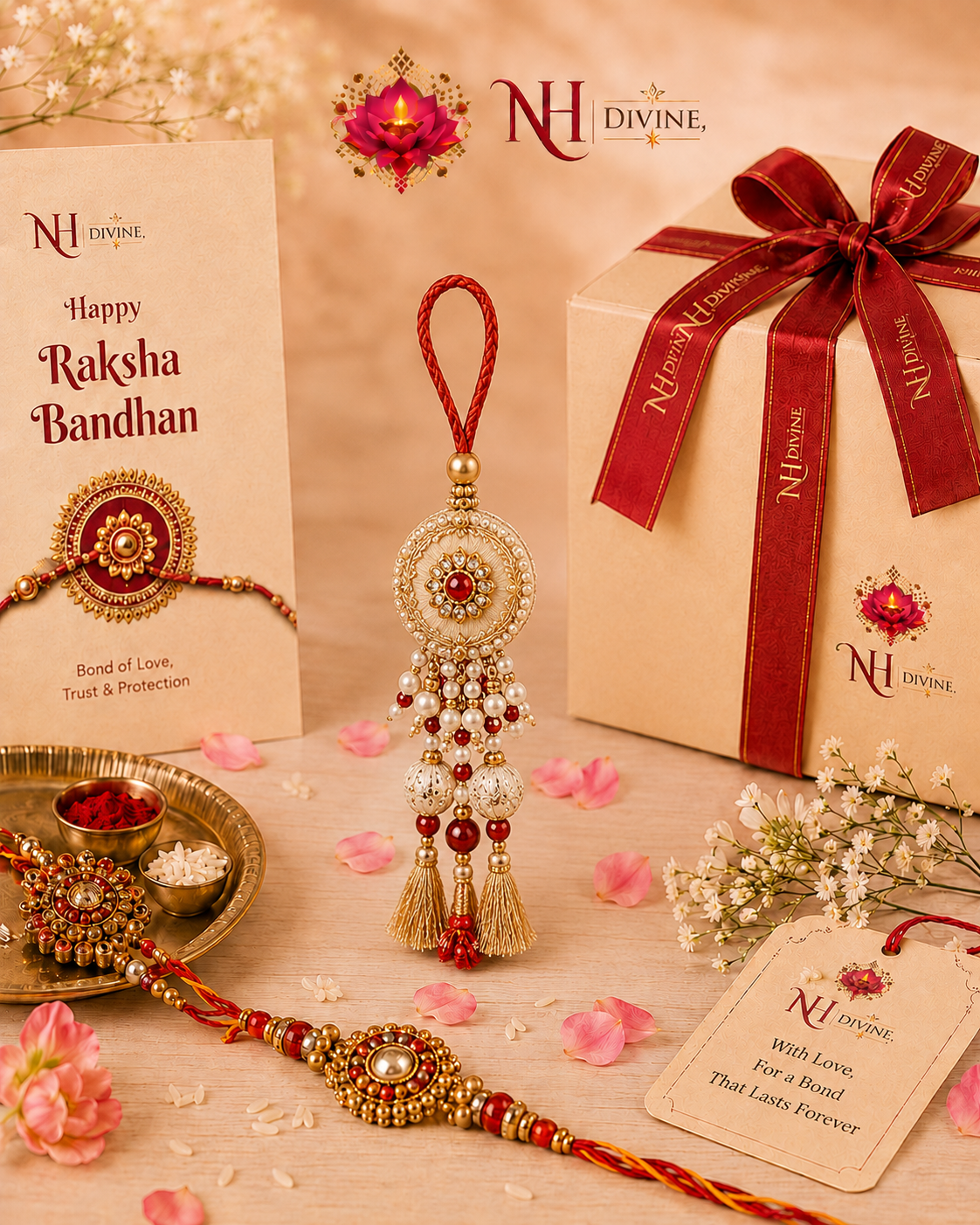
Elegant designer lumba rakhi crafted for sisters-in-law, featuring premium beadwork, metallic thread, and festive detailing. A beautiful addition to Raksha Bandhan celebrations that honors family traditions while complementing traditional Indian attire with grace and sophistication.
Designer Lumba (1 Piece)
The Designer Lumba included in the Premium Rakhi Box represents one of the more nuanced and family-oriented traditions within the larger Raksha Bandhan celebration, and its inclusion signals an attention to detail that goes beyond the more commonly recognized brother-sister rakhi. A lumba rakhi is traditionally tied by a sister not to her brother's wrist, but to her
sister-in-law's wrist — the wife of her brother — as a gesture of welcoming her into the family as a sister in her own right. This piece, then, is not a redundant addition to the box; it is a culturally specific object that acknowledges an entire branch of relationships often overlooked in generic rakhi sets that focus solely on the primary sibling bond.
Design-wise, the Designer Lumba typically leans toward a more delicate, jewelry-like aesthetic compared to the standard rakhi. Because it is worn by a woman, often alongside her existing bangles and jewelry, the lumba is crafted with finer detailing — small beadwork, pearl-like accents, gota-patti embroidery, or fine metallic thread work in gold or silver tones. Unlike the more masculine, simpler design of a brother's rakhi, the lumba is meant to complement traditional Indian attire, working well with a saree or salwar kameez, particularly during the festive gathering where extended family comes together for the celebration. The craftsmanship reflects an understanding that this piece will be seen, worn, and possibly photographed throughout the day, making its visual refinement just as important as its symbolic meaning.
The tradition of tying a lumba varies slightly by region and family custom, but its core purpose remains consistent: it is an acknowledgment that marriage does not simply add a person to the family, it adds a sibling. For many women who marry into a family, particularly those who may not have had close relationships with their in-laws in the early years of marriage, receiving a lumba rakhi from a sister-in-law can be a genuinely warm, welcoming gesture — a small but symbolically rich indication that they are seen not just as someone's wife, but as a sister to be celebrated on this day as well.
Including this single, well-designed lumba in the Premium Rakhi Box reflects a broader inclusivity in how the box has been curated. Rather than assuming a nuclear family structure where only one brother receives a rakhi, this box acknowledges the layered, extended nature of many Indian households, where celebrations often involve multiple brothers, their wives, cousins, and a wide network of relationships that are all, in their own way, touched by the spirit of Raksha Bandhan. For families with sisters-in-law, this piece removes the need to purchase a separate rakhi set entirely, since it is already thoughtfully included as part of the premium offering.
From a practical standpoint, the lumba is packaged carefully within the compartmentalized gift box to prevent tangling with its more delicate threads and beadwork, distinguishing it from the sturdier, simpler brother's rakhi that can withstand more casual handling. Buyers who are new to this tradition, particularly younger customers or those in urban nuclear families with fewer ritual touchpoints, often appreciate the inclusion of the lumba as an introduction to a lesser-known but meaningful custom, expanding their understanding of the festival's full scope beyond what is typically shown in mainstream advertising.
In essence, the Designer Lumba is a quiet but deliberate statement piece within the Premium Rakhi Box — a single item that broadens the emotional and relational scope of the entire gift set, ensuring that the celebration of sibling bonds extends fully to the women who have married into the family, honoring them with the same warmth, ritual, and recognition traditionally reserved for blood siblings.