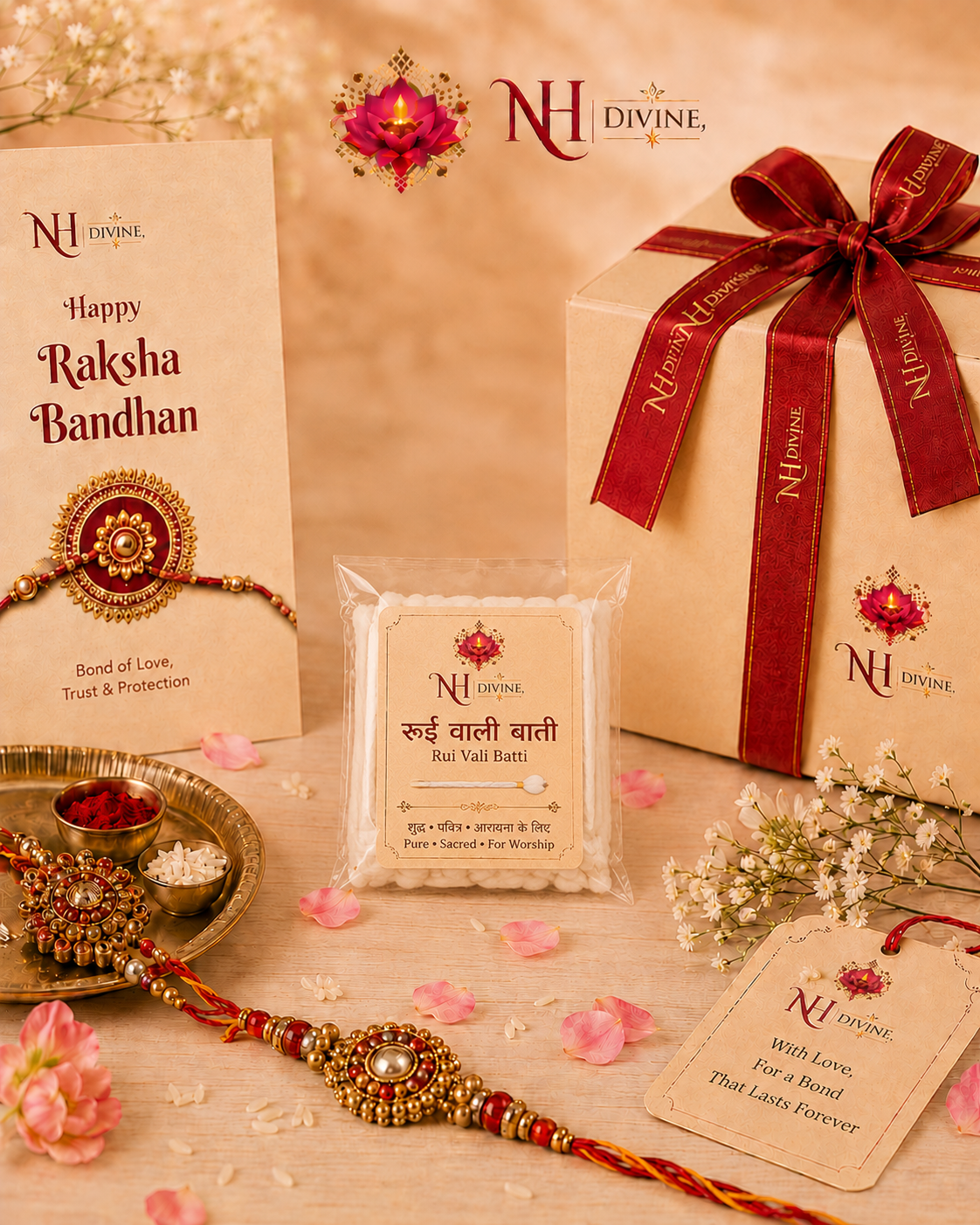
Rui Batti (Cotton Wicks)
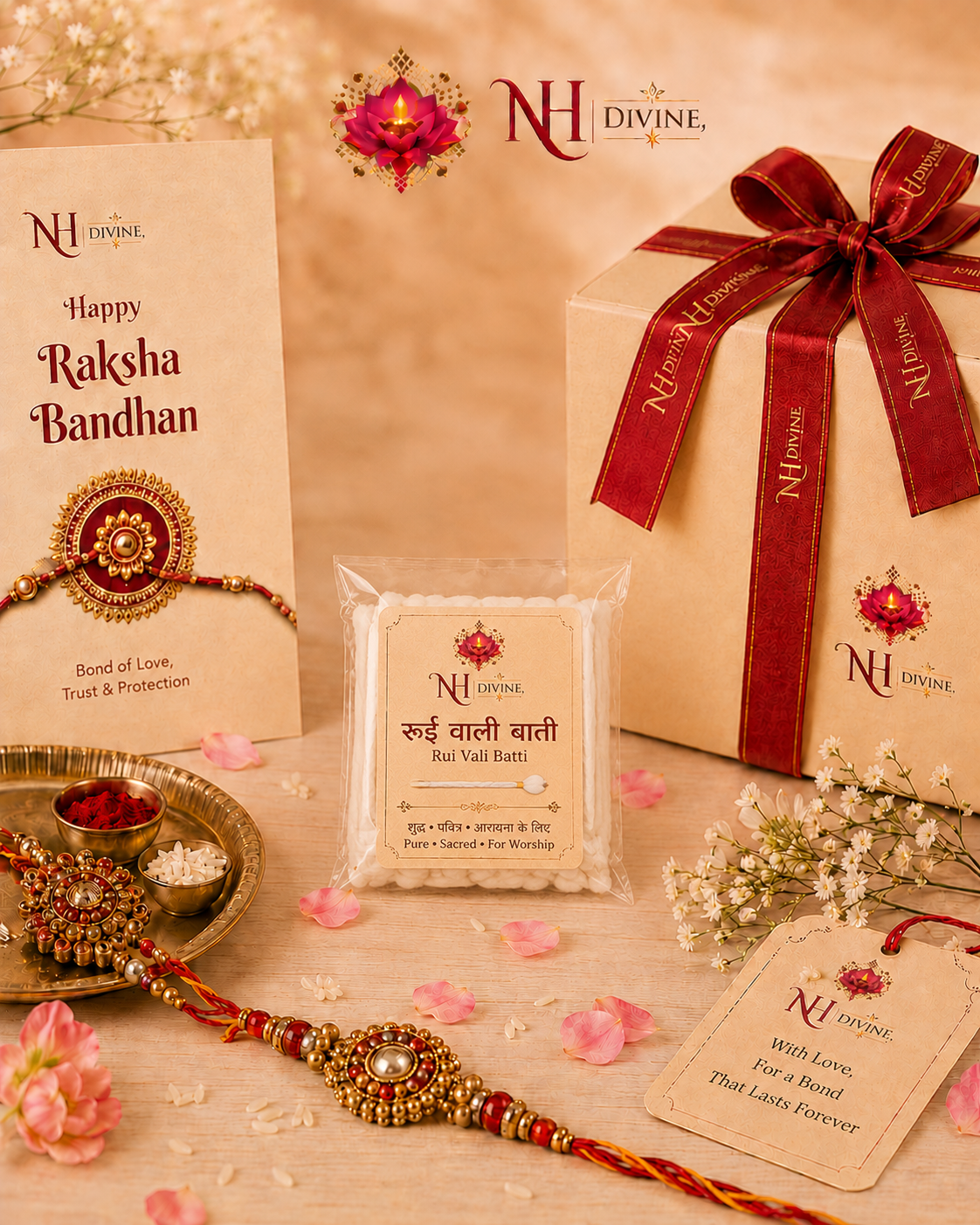
Premium pure cotton wicks specially designed for diyas used during Raksha Bandhan, pooja, and aarti ceremonies. These clean-burning cotton battis provide a steady flame with desi ghee or oil, ensuring a complete and traditional worship experience.
Rui Batti (Cotton Wicks)
The Rui Batti, or cotton wicks, included in the Premium Rakhi Box may be among the smallest and least conspicuous items in the entire set, yet without them, the diya at the heart of the aarti ceremony cannot be lit at all, making this modest inclusion a quietly essential piece of the ritual puzzle. These hand-rolled or machine-cut cotton wicks are specifically designed to be soaked in ghee or oil and placed within the diya, where they draw the fuel upward through capillary action to sustain a steady, clean-burning flame throughout the aarti performed during the Raksha Bandhan ceremony.
The material composition of these wicks matters significantly for both practical and ritual reasons. Pure cotton is favored over synthetic fibers because it burns cleanly, without releasing the acrid smoke or toxic fumes that synthetic materials can produce when exposed to an open flame, an important consideration given that this ritual is performed in close proximity to family members gathered around for the ceremony, often in an indoor setting such as a living room or puja corner. The natural, breathable structure of cotton fiber also allows it to absorb and wick the ghee or oil efficiently, sustaining a longer, more even burn compared to poorly made alternatives that might burn out too quickly or unevenly, potentially disrupting the aarti gesture partway through.
The wicks included in this Premium Box are typically sized and shaped appropriately for use with the accompanying diya, whether rolled into a simple straight wick or twisted slightly for improved structural stability when standing upright in the shallow well of the lamp. Some traditional variations feature wicks rolled with a small amount of additional cotton at the base to help them stand upright more securely within the diya, preventing them from tipping over or extinguishing prematurely during the ceremony — a small but meaningful design detail for anyone who has experienced the minor frustration of a wick that keeps falling over or refuses to stay lit during an important ritual moment.
In many households, especially those where daily or weekly pooja is regularly performed, a ready supply of rui batti is considered a household staple, similar to matches or incense, always kept on hand for whenever a lamp needs to be lit for prayer. For families who may not maintain this kind of daily ritual practice, however, sourcing wicks specifically for a single occasion like Raksha Bandhan can be an easily overlooked detail, particularly for younger or more urban buyers less accustomed to assembling the full set of items needed for a traditional aarti.
Including the wicks directly within the Premium Rakhi Box eliminates this potential gap entirely, ensuring that every component needed to properly light and use the diya is present and accounted for, without requiring a last-minute trip to a local pooja supplies store.
Beyond their immediate use in the Raksha Bandhan ceremony, any leftover wicks from this small supply can be kept and used for future household prayers, other festivals throughout the year, or minor rituals performed on auspicious days according to the Hindu calendar, extending their usefulness well past the single day for which they were originally included. Their low cost relative to other items in the box belies their functional importance — without a properly burning wick, the diya remains unlit, and without a lit diya, the aarti gesture central to the ceremony cannot be performed as tradition dictates.
In this sense, the Rui Batti represents a small but telling detail in the overall thoughtfulness of thePremiumRakhiBox'scuration—anitemeasytooverlookwhenassemblingritualsupplies independently, but essential enough that its absence would disrupt the entire ceremonial sequence the box has been carefully designed to support from start to finish.